
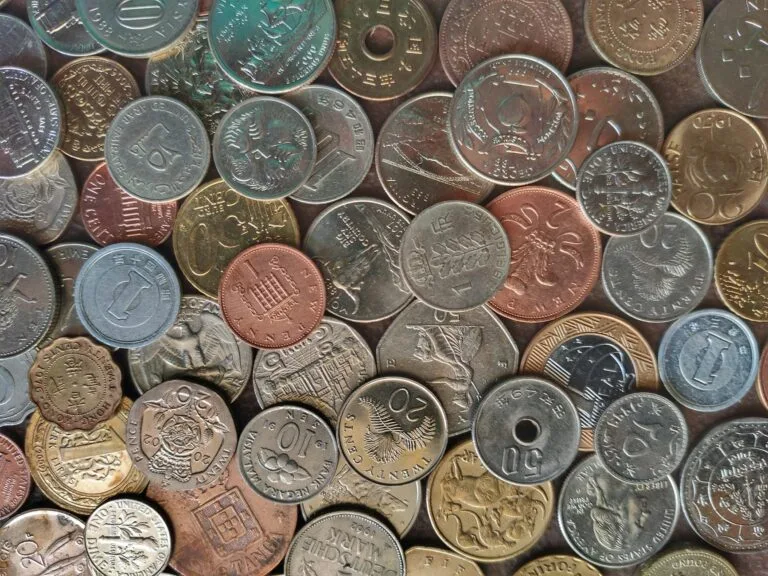
Every gold investor eventually encounters the same nervous question, usually from a relative who learned about gold last week: “Couldn’t the government just confiscate it again, like they did in 1933?” The question deserves a serious answer, not a dismissive one, because the historical event was real, the legal authority used to do it still exists in modified form, and the underlying conditions that motivated it have parallels today. But the practical risk of a repeat in 2026 is meaningfully lower than the internet would have you believe, and the reasons why are worth understanding.
On this page
What actually happened in 1933
On April 5, 1933, President Franklin D. Roosevelt signed Executive Order 6102. It required people and companies to deliver their gold coin, gold bullion and gold certificates to a Federal Reserve Bank or member bank by May 1, 1933, and paid for it at the official price of $20.67 per ounce. Each person could keep up to $100 in gold coin and gold certificates.
The Gold Reserve Act followed in January 1934, and the official U.S. gold price rose from about $20.67 to $35 per ounce. In gold terms, a dollar then bought about 41% less gold. That is not the same as a 41% overnight loss of purchasing power against consumer goods, and retaining gold did not guarantee preservation of every household’s real wealth.
The legal mechanism was the Trading With the Enemy Act of 1917, expanded by the Emergency Banking Act of 1933, which gave the president sweeping powers over gold during a declared national emergency. The order was enforced via a $10,000 fine (about $250,000 today) and up to 10 years in prison. In practice, prosecutions were rare, a few high-profile cases were used to intimidate the public, and most Americans complied voluntarily. Banks were the primary collection point because the order required gold to be deposited with a Federal Reserve member bank.
The order had two specific carve-outs that are often forgotten: collectible coins with numismatic value were explicitly exempt, and so was gold used in industry, jewelry, and dentistry. The numismatic exemption is why dealers today emphasize pre-1933 European gold coins as “confiscation-proof”, the legal precedent for treating them differently is in the original executive order text.

Why 1933 actually happened: it wasn’t about gold
The confiscation wasn’t a moral or ideological act. It was a technical fix for a specific problem: the US dollar was on a gold standard, the Treasury needed to expand the money supply to fight deflation during the worst year of the Great Depression, and the Federal Reserve Act required the Federal Reserve Banks to hold gold equal to 40% of Federal Reserve notes outstanding. Without more gold behind the notes, the currency could not expand. Confiscating private gold gave the government the reserves it needed to devalue the dollar and inject liquidity into the banking system.
This is the critical detail: the US is not on a gold standard today. The dollar has been a fully fiat currency since August 15, 1971, when Nixon ended the international convertibility of dollars into gold. The Treasury does not need to acquire private gold to expand the money supply, it does that by buying Treasury securities through the Federal Reserve, or by direct fiscal spending. The mechanical reason for 1933-style confiscation no longer exists.
Does the government still have legal authority?
Technically, yes. The International Emergency Economic Powers Act (IEEPA) of 1977 gives the president broad authority to regulate or prohibit transactions in any property in which a foreign country or national has an interest during a declared national emergency. The president could plausibly use IEEPA to restrict gold trading, freeze gold-related accounts at regulated institutions, or impose reporting requirements that effectively chill private gold ownership without outright seizure.
The Defense Production Act (1950) provides additional emergency powers. The Trading With the Enemy Act is often cited here but no longer fits: the 1977 IEEPA amendments stripped its peacetime national-emergency powers and confined it to periods of declared war, and Cuba is the only country still restricted under it. None of these would authorize the kind of door-to-door seizure that some YouTube videos imagine, but they could authorize freezing custodial gold, banning new bullion sales, or imposing a windfall tax on gold gains during a currency crisis. These are real risks, even if outright physical confiscation isn’t.
What actually happens to gold in modern currency crises
The honest analog isn’t 1933, it’s looking at what governments have done to gold in countries that have experienced serious currency crises over the last fifty years. The list is long: Argentina (multiple), Venezuela (2018-present), Turkey (2018, 2021), Russia (2014, 2022), India (1962-1990), and Zimbabwe (2008). The pattern across all of them is the same:
- Restrictions on gold imports and exports, usually via customs declarations and quotas
- Reporting requirements on gold purchases above small thresholds
- Restrictions on bank lockboxes being used to store gold, or compulsory inventories of contents
- Windfall taxes or transaction taxes on gold trades during crisis periods
- Capital controls that prevent moving gold-equivalent value across borders
Almost no modern democracy has executed an outright 1933-style seizure. The friction-creation approach works better politically (less optics damage) and economically (you raise revenue from taxes rather than triggering a black market). India’s 1968 Gold Control Act is the closest modern analog, it restricted private gold ownership to traditional jewelry forms and required dealers to be licensed. It failed spectacularly: smuggling and unofficial trade flourished, and the law was repealed in 1990.
What you can actually do to reduce confiscation risk
If confiscation risk is the lens you’re worried about, and to be clear, it’s a low-probability tail risk, not a base case, there are practical mitigations that don’t require buying into doomer narratives:
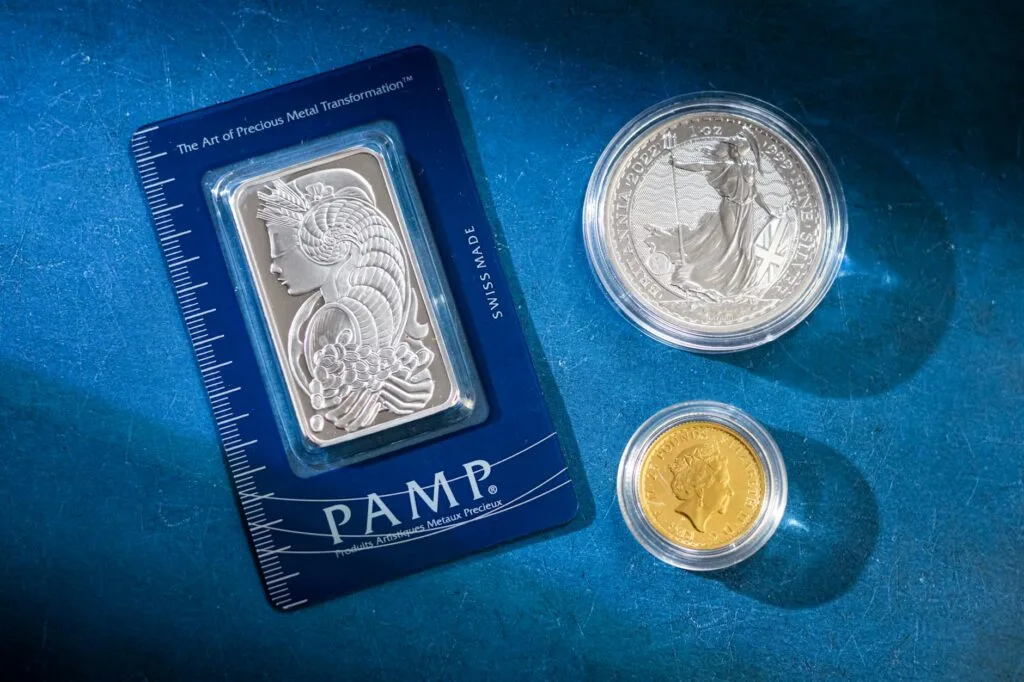
Diversify storage jurisdictions. Owning some gold in a non-US allocated storage facility (Switzerland and Singapore are the most credible) means your entire position isn’t subject to a single legal regime. Companies like BullionStar, Goldmoney, and Swiss vault operators offer this; expect roughly 0.25% to 0.5% annual storage fees (BullionStar charges 0.39% a year on gold bullion, Goldmoney charges 0.25% a year on gold, about $250 on a $100,000 holding, subject to a US$10 monthly minimum, per its February 2026 fee schedule). The mechanics are similar to a brokerage account but the asset and jurisdiction are different.
Hold some physical at home, in modest amounts. Home storage carries theft risk but eliminates counterparty risk entirely. The amount worth keeping at home depends on your insurance, security setup, and the value of “I can touch this without asking anyone” peace of mind. For most people, $5,000-$50,000 in home-stored bullion is a reasonable range.
Prefer common bullion coins over numismatic premiums. The 1933 numismatic exemption is interesting historically, but no modern dealer will guarantee you what a future executive order will or won’t exempt. Pay for gold content, not for hypothetical legal status.
Keep records. If you ever need to prove cost basis for capital gains tax purposes, or to justify a large bullion holding in a regulatory audit, having dated invoices and serial numbers (for bars) is essential. The capital gains calculator walks through the tax math for the US, Canada, and UK rules.
The right frame for the risk
Confiscation is one of perhaps a dozen tail risks gold owners face. Theft, custodian failure, regulatory friction, tax changes, and physical loss are all higher-probability outcomes than outright seizure. The asset still works as a wealth-preservation tool not because the government can’t touch it, clearly it can, but because gold’s value is global, recognized across regimes, and difficult to fully suppress in practice. The point isn’t that gold is invulnerable. It’s that gold is harder to fully control than bank deposits, brokerage accounts, or real estate, all of which face similar tail risks with worse practical recovery options.
If you want the longer-arc view of how gold has historically behaved when governments have tried to restrict it, our piece on why China and Russia are buying record amounts of gold covers the geopolitical layer, and gold’s performance during banking crises covers the macro-economic one. The history matters more than the headlines.
Related articles
Best Times to Buy Gold: Seasonality Patterns and Cycles
January has often been one of gold's stronger months in historical studies, but seasonal averages depend on the sample period...
Beginner’s Guide to Gold: Coins, ETFs, Miners & IRAs
Compare the costs, access, custody and risks of physical gold, funds, mining shares and eligible retirement-account holdings.
Gold and the US Dollar: Why the Relationship Changes
Gold and the dollar often move in opposite directions, but the relationship changes. Dollar pricing, real yields and demand all...

Quang Huynh
Quang Huynh is the Founder of GoldMarketDaily. He writes clear guides and builds free tools for gold decisions, with analysis of gold, silver and the macro forces that move precious-metals prices. Analysis, not advice. GoldMarketDaily does not sell metals, does not pay for placement, and has no affiliate relationships. If that changes, the affected pages will say so.