
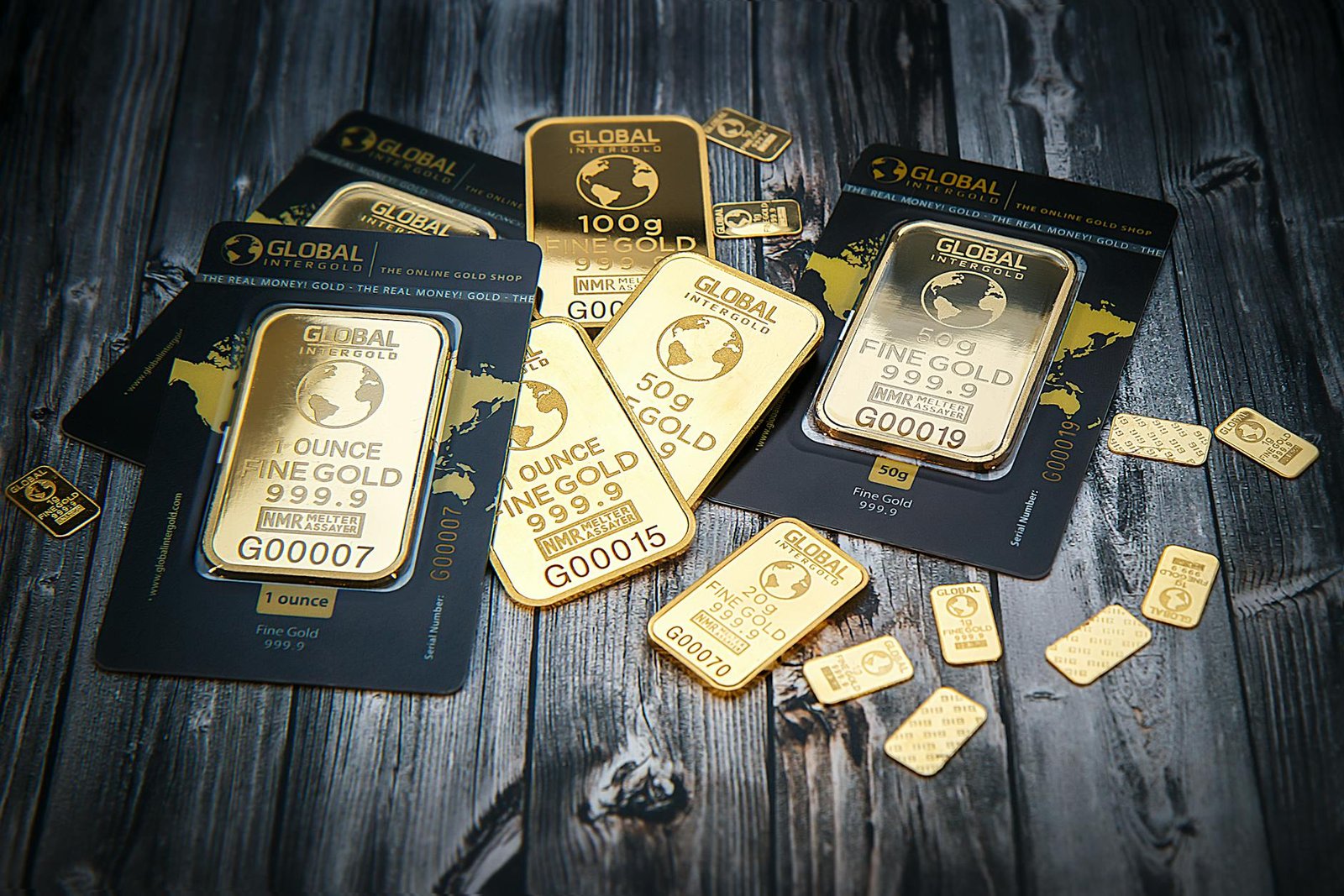
A 1-ounce American Gold Eagle coin doesn’t have a price tag set by the mint. Neither does a gram of gold in a jewelry store window, or the bars sitting in a bank vault. They all reference a single number that updates every few seconds across the planet , the gold spot price.
If you’ve ever looked into buying gold coins, jewelry, or gold investments, you’ve probably come across the term. Understanding what it actually means , and what it doesn’t , is one of the most useful pieces of knowledge for anyone interested in the precious metals market. This guide breaks down where the spot price comes from, how it’s calculated, and why the price you actually pay is almost always different.
What Exactly Is the Gold Spot Price?
The gold spot price is the current market price for immediate delivery of gold. Think of it as gold’s “right now” price , what one troy ounce of pure gold would cost if you bought it at this moment for immediate settlement.
The word “spot” comes from the phrase “on the spot,” meaning the transaction happens right away (or within two business days, to be precise). This is different from “futures” prices, where you’re agreeing to buy gold at a set price on a specific future date.
A Quick Note on Troy Ounces
One common point of confusion: gold is measured in troy ounces, not the regular avoirdupois ounces you’d use in a kitchen. A troy ounce equals approximately 31.1 grams, while a regular ounce is about 28.35 grams , so a troy ounce is roughly 10% heavier. Whenever you see a gold price quoted “per ounce,” it’s always per troy ounce.
How the Gold Spot Price Is Calculated
Unlike a loaf of bread at the grocery store, gold doesn’t have a single store setting its price. The spot price emerges from a complex global system involving multiple markets, participants, and mechanisms working continuously.
1. The Primary Price Discovery Markets
Gold’s spot price is primarily determined through trading on major global exchanges:
- COMEX (New York) , the world’s largest gold futures exchange, part of the CME Group. Most global gold price discovery happens here.
- London Bullion Market (LBMA) , the center of physical gold trading, where the LBMA Gold Price benchmark is set twice daily.
- Shanghai Gold Exchange , Asia’s dominant gold marketplace, increasingly influential in global pricing.
- Other markets , including Tokyo, Hong Kong, and Zurich, which contribute to round-the-clock price discovery.
2. The Role of Futures Contracts
Most of the trading that determines gold’s spot price actually happens through futures contracts on COMEX, not through buying and selling physical gold bars directly.
Here’s how it works: thousands of traders buy and sell contracts for future gold delivery. The nearest-month contract (the one closest to expiration) typically trades closest to the spot price. Market makers and data providers calculate the spot price by looking at these highly liquid futures contracts and adjusting for the time until delivery.
For example, if a near-month gold futures contract is trading at $4,732 and there are 45 days until delivery, the spot price might be calculated at $4,727 after accounting for storage costs and interest rates (known as the “cost of carry”).
3. The LBMA Gold Price (The London Fix)
Twice each business day , at 10:30 AM and 3:00 PM London time , a specific benchmark price is set through an electronic auction administered by ICE Benchmark Administration. During this auction:
- Participating banks submit buy and sell orders
- The auction administrator proposes a starting price
- If buy and sell orders are balanced within a tolerance, that becomes the official price
- If not, the price adjusts up or down until balance is achieved
This LBMA Gold Price is used as a reference point for pricing gold products worldwide, from ETFs to mining contracts to jewelry manufacturing.
4. Supply and Demand in Real Time
Throughout the trading day, the spot price fluctuates based on continuous buying and selling activity. When more participants want to buy gold than sell it, the price rises. When sellers outnumber buyers, it falls. Every quote you see is the cumulative result of millions of individual decisions by traders, investors, central banks, jewelers, and industrial users around the world.
What Factors Influence the Gold Spot Price?
Several major forces drive spot price movements:
Economic Uncertainty
Gold has historically been viewed as a safe haven during turbulent economic times. When investors worry about recessions, banking crises, or market volatility, demand for gold typically increases, pushing the spot price up.
Inflation and Currency Values
When paper currencies lose purchasing power due to inflation, gold often benefits. Many investors view gold as a hedge against inflation, which can drive increased demand and higher prices. (For a deeper look, see our gold vs inflation analysis.)
Interest Rates
Gold doesn’t pay interest or dividends, so when interest rates are high, the “opportunity cost” of holding gold increases. Conversely, lower interest rates often support higher gold prices. The relationship between the dollar and gold is closely tied to rate expectations , we covered the data in detail in why gold rises when the dollar falls.
Central Bank Activity
Central banks hold significant gold reserves and their buying or selling patterns can substantially impact prices. According to data from the World Gold Council, central banks have been net buyers of gold for over a decade, providing structural support for prices.
Geopolitical Events
Wars, trade disputes, political instability, and international tensions often increase gold’s appeal as a stable store of value.
Industrial and Jewelry Demand
Gold is used in electronics, dentistry, aerospace, and of course, jewelry. Changes in demand from these sectors affect the overall supply-demand balance.
Spot Price vs. The Price You Actually Pay
Something crucial that catches many first-time gold buyers off guard: you’ll almost never pay exactly the spot price when buying physical gold. If spot is $X, you’ll pay $X plus a “premium” that covers manufacturing, distribution, and dealer margin.
The Premium
The premium is the amount above spot price that dealers charge. It covers:
- Manufacturing costs , refining, minting, and producing coins or bars
- Dealer markup , the dealer’s profit margin
- Distribution costs , shipping, insurance, and handling
- Demand premiums , popular products often carry higher premiums
A basic gold bar might carry a premium of 2-5% over spot, while collectible coins or smaller denominations can have premiums of 10% or more. Smaller fractional coins (like 1/10 oz) carry the highest percentage premiums because manufacturing costs don’t scale down proportionally.
Where to Find the Current Gold Spot Price
The gold spot price is widely quoted and easy to find. Reliable sources include:
- Financial news websites (Bloomberg, Reuters, CNBC)
- Precious metals dealer websites
- Trading platforms and brokerage accounts
- Dedicated precious metals sites like GoldMarketDaily.com
- Mobile apps that track commodity prices
The price updates continuously during market hours, so quotes from different sources at the same moment should be nearly identical (small differences of a few cents are normal due to data feed timing).
Common Misconceptions About the Gold Spot Price
Myth: Someone “sets” the gold price.
Reality: The spot price emerges from millions of market transactions. While the LBMA sets benchmark prices twice daily, these benchmarks simply reflect where supply and demand balance at that moment.
Myth: You can buy gold at exactly the spot price.
Reality: Spot price is a wholesale, theoretical reference. Real-world purchases include premiums for production and distribution.
Myth: The spot price is the same everywhere.
Reality: While major markets are closely linked, small regional variations exist due to local supply and demand, import duties, and currency conversion.
What to Watch Next
For anyone using the spot price as a reference point going forward, a handful of indicators are worth tracking:
- Premium spreads at major dealers , when premiums widen on coins and bars, it usually signals physical demand outpacing supply.
- LBMA AM vs PM Gold Price gap , a wide intraday gap between the two daily fixes can signal volatility in the underlying market.
- COMEX open interest , large changes in the number of open futures contracts can foreshadow directional moves.
- Shanghai vs London price differential , when Shanghai trades at a sustained premium to London, it indicates strong physical demand from Asia.
- Central bank reserve announcements , quarterly purchase data from major buyers like the People’s Bank of China and Reserve Bank of India can move spot prices.
The spot price is a starting point , the foundation upon which the entire gold market is built. Understanding it doesn’t require a financial background. It just requires knowing that the number you see quoted is the result of a global, continuous, real-time conversation among millions of buyers and sellers, all happening on top of physical metal that hasn’t fundamentally changed in 5,000 years.