
Gold does not corrode. So people assume storage is only a security question. The metal is fine. What harms a collection is the things you store it in, and the air you store it in.
On this page
The short version
- Avoid PVC. Its plasticiser migrates and leaves a green sticky residue that permanently damages surfaces.
- Safe materials are polyethylene, polypropylene, polystyrene, acrylic and inert polyester such as Mylar.
- Conservation practice houses metal below about 35 percent relative humidity.
- Silica gel controls humidity inside a sealed container, which is the only place it works.
- Handle by the edges. Fingerprints etch, and cleaning almost always costs more value than the mark did.
The PVC problem, stated properly
Soft plastic flips and folders were sold to collectors for decades. A lot of them were PVC. The plastic is flexible because of added plasticisers. Those additives migrate out over time.
What they leave behind is a greenish sticky residue on the surface of the coin. Museum conservation guidance is blunt about this. The damage is extremely difficult to remove, and it permanently degrades the surface. Our guide to PVC damage covers what to do if you find it. Prevention is simply not using the material.
The safe alternatives are well established in conservation. They are polyethylene, polypropylene, polystyrene, acrylic, and inert polyester film such as Mylar. None of those off gas plasticisers. If a holder is soft, floppy and smells faintly of plastic, treat it as suspect.
Air is the other half
Gold itself is stable. What surrounds it may not be. Most collections also hold silver and copper alloyed pieces, which certainly are not.
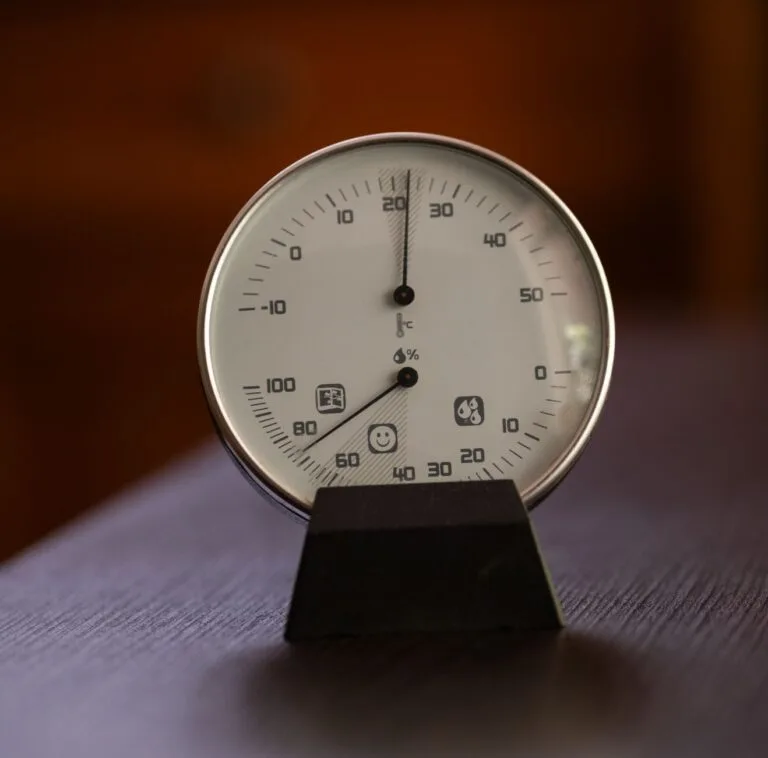
Stable conditions that are dry enough help protect alloys that can react. They also help protect the materials around them. Basements can be damp, and a safe is not necessarily airtight. Measure conditions with a hygrometer and use a suitable sealed enclosure if humidity needs control.
Desiccant works best inside a well-sealed enclosure, with enough capacity for its volume and moisture load. Use a hygrometer to check conditions and regenerate or replace the desiccant according to its instructions. A safe is not necessarily airtight.
| Material or condition | Verdict |
|---|---|
| PVC flips and soft folders | Avoid. Plasticiser migration damages surfaces permanently |
| Conservation-grade polyethylene, polypropylene, acrylic or polyester | Choose PVC-free, additive-appropriate holders intended for conservation |
| Relative humidity above about 35 percent | Raises corrosion and tarnish risk |
| Silica gel in a sealed container | Effective, and needs periodic regeneration |
| Cardboard, wool felt, rubber bands | Sulphur sources. Keep away from silver |
Where in the house
Security decides where most people put a safe. Conservation would choose differently, and the two goals conflict more often than they agree.
Basements are humid. Attics swing through wide temperature ranges. A temperature swing in a closed container drives condensation. That is worse than steady humidity. Exterior walls and garages share the same problem. An interior closet on a living floor is dull, unglamorous and usually the best environment in the building.
If security forces a worse location, seal the container and control the microclimate inside it instead. That is the job silica gel does. A cheap hygrometer inside the safe tells you whether it is working. Guessing is the failure mode here, because nothing visible happens until the damage is done.
Handling, which costs nothing
Skin leaves salts and acids behind. On a proof or uncirculated surface a fingerprint etches in over months. It cannot be removed without leaving evidence, which is one reason our guide to proof coins insists on the original capsule.
Hold coins by the edge, over a soft surface, and put them straight back. Never talk over an open coin, since that is how it collects moisture. And resist cleaning, for the reasons set out in should you clean gold coins: cleaning is visible to any experienced buyer and usually costs more than the toning or spotting it was meant to fix.
Tubes, capsules and what each is for
The two common holders do different jobs, and people often buy the wrong one.
A tube stores a stack of identical coins cheaply and keeps them from sliding around. It does not seal, and coins inside it still touch one another. That is fine for bullion you will sell by weight.
A capsule holds one coin, with no contact and a much better barrier. It costs more per coin. Use capsules for anything with a premium, a proof finish, or a surface you would mind losing. Use tubes for stacking metal. Mixing the two up is how a good coin ends up rubbing against nine others.
What this actually costs
Very little, which is the point. Inert capsules, a sealed container, a tub of silica gel and a cheap hygrometer cost almost nothing. Set that against the value of the metal they protect.
Spots and residue can affect resale even when metal content is unchanged. Our guide to spots and discoloration explains the distinction. For collectible surfaces, avoid cleaning without specialist advice.
Common questions
Can gold tarnish or corrode in storage?
Pure gold is chemically stable and does not corrode, but that is not the whole story. Alloyed coins contain copper and silver that can react. Spots can appear on some bullion. The holders and air around the metal cause most damage that you could avoid. Storage practice matters more for what surrounds the gold than for the gold itself.
What plastic is safe for storing coins?
Choose holders specifically made for coin conservation, with suitable inert materials and no PVC. A generic polymer name does not establish that every additive or adhesive in a finished holder is safe.
What humidity should I store gold at?
Low, stable humidity helps protect susceptible alloys and surrounding materials. A safe may retain moisture or admit room air; it is not necessarily airtight. Monitor the actual conditions and use an appropriate sealed enclosure and desiccant.
Does silica gel actually work?
It can control humidity in a suitably sealed enclosure when the amount and condition of the desiccant are appropriate. Check a hygrometer and regenerate or replace it as directed. An open or leaky space may overwhelm its capacity.
Related articles
Junk Silver: What Pre-1965 US Coins Contain and How to Price Them
Junk silver is a terrible name for a sensible thing: worn American coins from before 1965 that are worth holding...
Safe Deposit Boxes and Escheat: How a Forgotten Box Gets Sold
A safe deposit box needs continuing attention to rent, contact details and estate records. If it becomes unclaimed, state procedures...
Holding Bullion in a Living Trust: Titling, Access, and What It Solves
How bullion can be assigned to a living trust, which custody documents to check and why state law and the...

Quang Huynh
Quang Huynh is the Founder of GoldMarketDaily. He writes clear guides and builds free tools for gold decisions, with analysis of gold, silver and the macro forces that move precious-metals prices. Analysis, not advice. GoldMarketDaily does not sell metals, does not pay for placement, and has no affiliate relationships. If that changes, the affected pages will say so.